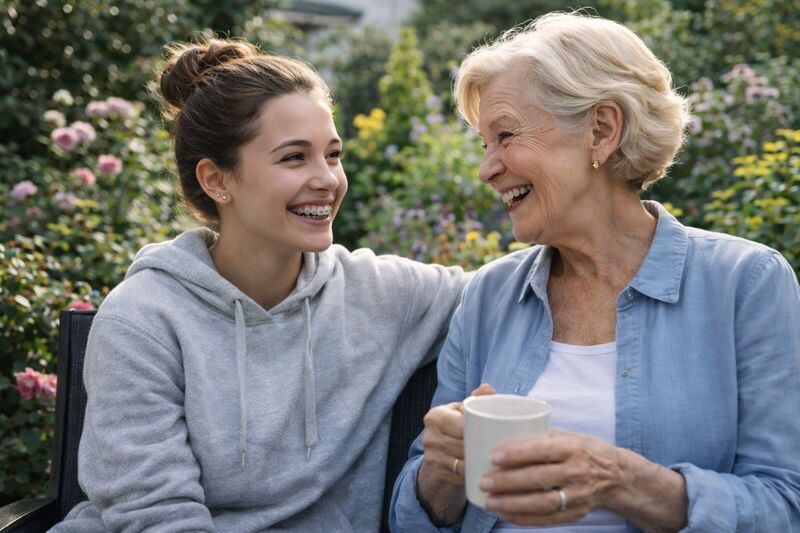
What is Cultural Exchange with Elderly Hosts?
A comprehensive guide to intergenerational living, homeshare programs, and how students and elderly hosts build meaningful connections across cultures and generations.
Understanding Cultural Exchange
Cultural exchange with elderly hosts is a modern form of intergenerational living that pairs young people — typically university students or recent graduates — with older adults who have a spare room in their home. Unlike traditional rental arrangements, this model is built on mutual benefit: students receive free to moderately priced accommodation in exchange for providing companionship and light daily assistance to their hosts.
The concept draws on a long history of intergenerational programs and homeshare initiatives that have existed in various forms across Europe, North America, and Asia for decades. Organizations in France, Spain, the UK, and Australia have pioneered homeshare models that reduce loneliness among elderly populations while addressing the student housing crisis. These programs have consistently shown positive outcomes for both participants, including improved mental health for older adults and significant cost savings for students.
What makes cultural exchange with elderly hosts unique is the emphasis on cross-cultural connection. When an international student lives with a local elderly host, both parties gain exposure to different languages, traditions, and perspectives. benefits page.
How Intergenerational Living Works
At its core, intergenerational living through AuCare is straightforward: a student moves into a private room in an elderly host's home and provides approximately 2 hours of daily companionship and light assistance. In return, the student receives free to moderately priced accommodation, access to shared living spaces. The arrangement is designed to be flexible — the specific tasks and schedule are agreed upon by both parties before the match is confirmed.
The 2-hour daily commitment is intentionally modest compared to traditional au pair programs, which often require 5 to 8 hours of work per day. This reduced time commitment ensures that students can focus on their studies, attend classes, and enjoy their social life while still making a meaningful contribution to their host's daily well-being. Tasks typically include conversation and companionship, help with technology, light cooking or meal preparation, accompanying the host on walks or errands, and occasional household help.
For a step-by-step breakdown of the entire process — from signing up to moving in — see our detailed How It Works guide. If you have specific questions, our FAQ page covers the most common topics.
Benefits for Students
The most immediate benefit for students is free to moderately priced accommodation. In cities where student housing costs can consume half or more of a monthly budget, living with an elderly host eliminates that financial burden entirely. Students save thousands of euros per semester, making study-abroad programs accessible even for those on tight budgets. Beyond the financial savings, students often receive home-cooked meals and a comfortable, furnished living space.
Cultural immersion is another major advantage. Living with a local host provides daily opportunities for authentic language practice in a low-pressure, conversational setting. Elderly hosts tend to be patient and encouraging language partners, and the daily interactions naturally accelerate fluency. Students also gain firsthand exposure to local customs, traditions, holidays, and social norms.
Perhaps the most underappreciated benefit is the development of life skills and emotional intelligence. Students learn patience, empathy, and responsibility through their interactions with their hosts. Benefits page.
Benefits for Elderly Hosts
Loneliness and social isolation are among the greatest challenges facing elderly populations worldwide. Studies consistently show that regular social interaction improves mental health, cognitive function, and even physical well-being in older adults. By welcoming a student into their home, hosts gain a daily companion — someone to share meals with, have conversations with, and enjoy activities alongside.
Practical daily assistance is another significant benefit. Students can help with tasks that may have become more difficult with age — using smartphones and computers, carrying groceries, preparing meals, tidying the home, or simply being present in case of an emergency. This support helps elderly hosts maintain their independence.
Hosting a student from another country or culture also brings a sense of purpose and excitement. Many hosts report feeling more energized and engaged with the world through their interactions with young people. Safety page.
Who Can Participate?
AuCare's cultural exchange program is open to students between the ages of 18 and 30 who are currently enrolled in a higher education institution or have recently graduated. Students should be genuinely interested in cultural exchange and intergenerational connection, have a positive and respectful attitude, and be willing to commit to the agreed-upon daily companionship schedule.
Elderly hosts are typically aged 60 and above, though there is no strict upper age limit. The key requirement is that hosts have a private room available for their student and are looking primarily for companionship and light assistance rather than medical or specialized care.
Both students and hosts go through a verification process that includes identity checks, background screening, and profile reviews. FAQ page.
What Does Daily Life Look Like?
A typical day in a cultural exchange arrangement is designed around flexibility and mutual agreement. There is no rigid schedule — instead, the student and host work together to find a routine that suits both their needs. For example, a student might share breakfast with their host in the morning, head to university for classes during the day, and then spend the early evening cooking dinner together.
Common activities include preparing meals together, going for walks in the neighborhood, helping with grocery shopping, assisting with phone or computer tasks, watching films or documentaries, playing card games or board games, gardening, or simply enjoying a cup of coffee and good conversation.
Students typically have at least one full day off per week, and their remaining free time is their own — for studying, socializing, exploring the city, or pursuing hobbies.
How AuCare Makes It Easy
AuCare simplifies the entire process of finding and managing an intergenerational living arrangement. Our platform uses a smart matching algorithm that considers location, language preferences, interests, lifestyle habits, and specific needs to suggest compatible student-host pairs.
Safety is built into every step. All participants undergo thorough identity verification and background checks before their profiles become active. We facilitate initial video calls so both parties can get to know each other before committing to an arrangement. Safety & Security page.
From creating your profile to moving in with your match, AuCare handles the logistics so you can focus on what matters. How It Works walks you through the complete process in detail.
Getting Started
Ready to experience intergenerational cultural exchange? Whether you're a student looking for affordable accommodation abroad or an elderly host seeking companionship and connection, AuCare makes it easy to get started.
Have questions? Check our FAQ or learn about safety and security.
Ready to Join Our Community?
Start your AuCare journey today and discover a new way to experience cultural exchange.